The waiver treats the symptom
- Oil import dependence
- 88.7%The Petroleum Planning and Analysis Cell reports import dependence based on consumption for 2025-26.
- Crude import bill
- $123.1 billionThe Petroleum Planning and Analysis Cell reports the figure for 2025-26.
- Brent crude
- $110.03 a barrelReuters reported the price at 1.08pm US Eastern time on 19 October 2026.
Donald Trump on 16 October waived duties and sanctions under the Lindsey O. Graham Sanctioning Russia and Iran Act, removing the immediate threat of a 100% US tariff on goods from the five largest buyers of Russian energy. The order is broad rather than India-specific, and the waiver lasts until the US president or senior officials decide that further action is appropriate. It also leaves earlier Russia sanctions intact.
That gives Indian refiners room to keep buying Russian crude without triggering the new tariff. It does not guarantee that Russia can supply more oil, or that available cargoes will be cheap. Russian arrivals fell to between 1.74 million and 1.82 million barrels a day in September, according to differing Kpler-based reports, as exports tightened and Chinese competition increased. The legal relief therefore protects an existing supply channel rather than creating a new one.
The larger vulnerability remains physical. India met 88.7% of its oil consumption through imports in 2025-26, while Brent traded at $110.03 a barrel during US trading on Monday. A reversible waiver cannot offset a prolonged loss of Gulf production and shipping.
The waiver reduces the risk of a trade penalty, but it neither guarantees extra Russian supply nor fixes the disruption in the Gulf.
For India, victory is not a flag over a battlefield. It is the return of reliable barrels at insurable freight rates.

An Iranian victory has two meanings
- Pre-war Hormuz flows
- 21.6 million barrels a dayThe US Energy Information Administration reports the average for the fourth quarter of 2025.
- Second-quarter flows
- 4.9 million barrels a dayThe US Energy Information Administration reports the average for the second quarter of 2026.
- Asian destination share
- 89%The US Energy Information Administration reports the share of Hormuz crude and condensate flows in the first half of 2025.
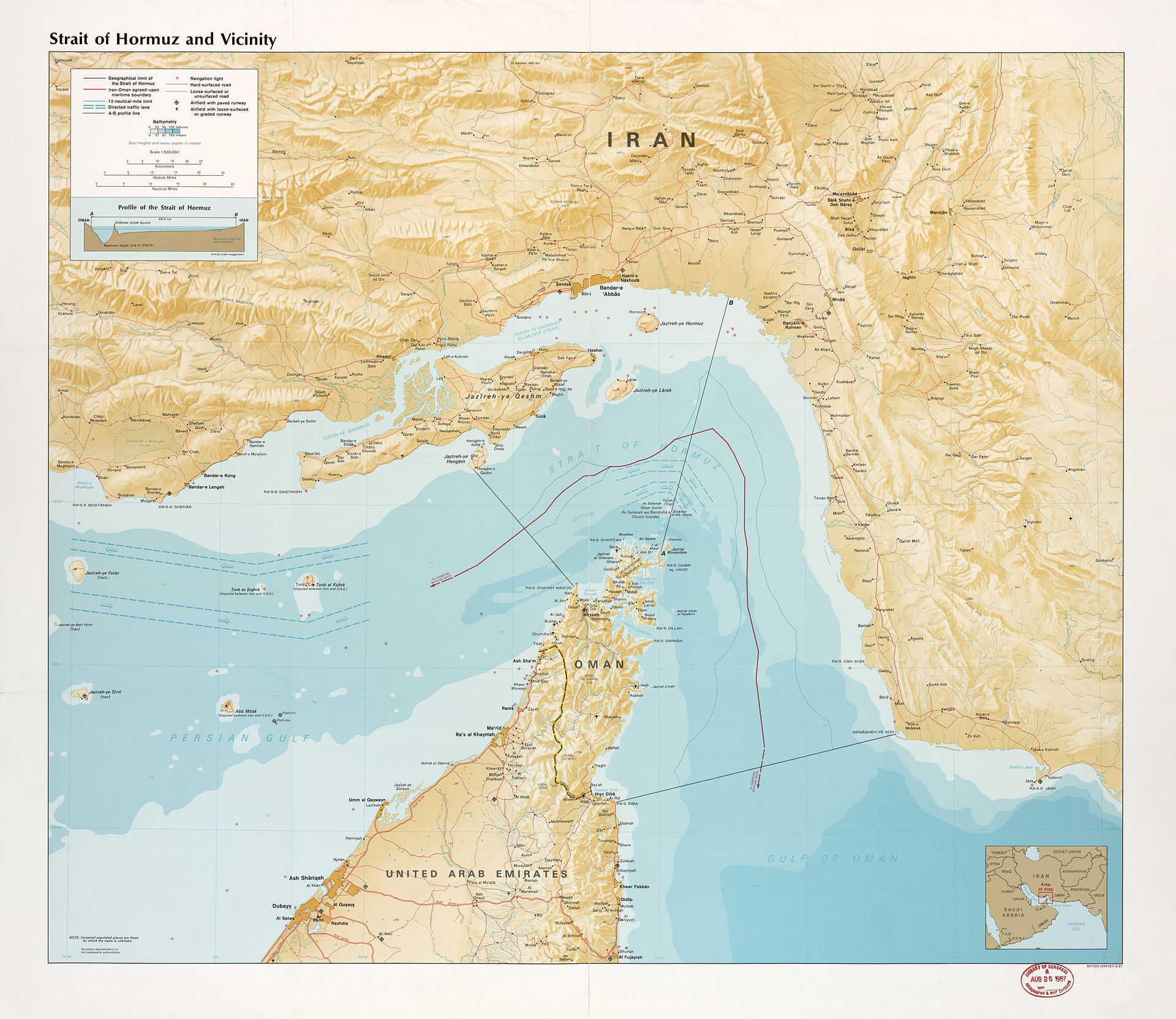
An Iranian victory could mean Washington lifting its blockade of Iranian ports, easing sanctions on Iranian oil and accepting a wider ceasefire. Iran says those steps form part of its conditions for reopening the Strait of Hormuz. If an agreement restored Iranian exports and normal tanker traffic, India could benefit even though the diplomatic result favoured Tehran. More Gulf barrels would compete with Russian, American and Atlantic Basin crude, while freight and insurance costs could fall.
The opposite version of an Iranian victory would be recognition, formal or practical, of Tehran’s ability to control passage. That would leave importers exposed to renewed restrictions whenever regional tensions rose. The distinction matters because Hormuz carried 21.6 million barrels a day of oil in the fourth quarter of 2025, before flows fell to 4.9 million in the second quarter of 2026. The US Energy Information Administration says Asian markets received 89% of the crude and condensate passing through the strait in the first half of 2025.
For India, victory is not a flag over a battlefield. It is the return of reliable barrels at insurable freight rates.
An outcome favourable to Tehran could lower India’s oil bill if it restores Iranian exports and safe passage, but not if it entrenches selective control over Hormuz.
An American victory is not enough
- Gulf output shut in
- More than 11 million barrels a dayThe US Energy Information Administration estimated the reduction during the continuing Hormuz disruption.
- Indian strategic storage
- 5.33 million tonnesThe Ministry of Petroleum and Natural Gas states the capacity of the three completed underground reserves.
- Estimated strategic cover
- 9.5 daysThe government estimate uses India’s 2019-20 consumption pattern.
An American victory could mean that Iran can no longer restrict commercial shipping, that its nuclear programme is constrained and that a verifiable settlement protects Hormuz. That result would be favourable for India if tankers returned, mines were cleared and Gulf producers reopened wells. The US Energy Information Administration estimated that regional producers had cut output by more than 11 million barrels a day during the disruption. Restoring that production would matter more than the nationality of the military winner.
Military dominance without political settlement would be less useful. Damaged terminals, recurring attacks, high war-risk insurance and cautious shipowners could keep delivered crude expensive after major combat ended. Producers would also need confidence that storage and shipping capacity would remain available before restoring output.
India has some protection, but not enough for an open-ended disruption. Its three underground strategic petroleum reserves hold 5.33 million tonnes, which the government previously estimated at 9.5 days of crude requirements using 2019-20 consumption. Commercial and refinery stocks extend the buffer, but official claims about total cover vary with what is counted. Stocks buy time. They do not replace a shipping route.
A US military success would stabilise India’s economy only if it produced durable maritime security and restored regional output.
India has stronger defences
- Current-account deficit
- 0.5% of GDPThe Reserve Bank of India reports the figure for the first quarter of 2026-27.
- Oil-price inflation sensitivity
- Around 50 basis pointsThe Reserve Bank of India assumes crude prices 10% above its baseline and full domestic pass-through.
- Oil-price growth sensitivity
- Around 15 basis points lowerThe Reserve Bank of India uses the same 10% oil-price shock.
The strongest case against treating crude as India’s largest macroeconomic fault line is that the country has adapted. Russia is now its biggest supplier, refiners have added cargoes from other regions, and petroleum-product exports provide some offset. Services exports and remittances also kept the current-account deficit at 0.5% of gross domestic product in the first quarter of 2026-27. A disruption to Hormuz no longer means an immediate shortage.
Retail-price management can also delay the inflation shock. State-owned Indian Oil, Bharat Petroleum and Hindustan Petroleum can absorb part of the increase when pump prices are held, while excise changes can shift some cost to the Budget. Upstream producers may gain from dearer crude, partly offsetting losses elsewhere in the listed market.
These defences weaken, but do not overturn, the argument. Diversification cannot replace the scale of Gulf exports during a worldwide shortage. Suppressing pump prices moves the loss to fuel retailers or taxpayers. The Reserve Bank of India estimated in April that a 10% increase in crude above its baseline could add around 50 basis points to inflation and subtract around 15 basis points from growth if fully passed through.
Diversified sourcing and modest external balances make India more resilient than the import-dependence figure alone suggests, but they redistribute the oil shock rather than remove it.
Duration decides the damage
- IEA emergency releases
- About 330 million barrelsThe International Energy Agency reported cumulative releases by member countries as of 14 October 2026.
- Remaining planned releases
- Around 100 million barrelsThe International Energy Agency agreed to accelerate these volumes.
- August Hormuz flows
- 7.6 million barrels a dayThe International Energy Agency compared this with pre-war volumes.
A prolonged conflict is the clearest threat to Indian macroeconomic stability. The International Energy Agency said Hormuz flows averaged 7.6 million barrels a day in August, 13.1 million below their pre-war level. Its members had released about 330 million barrels of emergency stocks by 14 October and planned roughly 100 million more. Emergency barrels can smooth shortages, but repeated releases show that normal trade has not recovered.
For investors, the transmission is direct. A higher import bill increases demand for dollars and strains the rupee. Fuel and freight feed into inflation. If pump prices rise, household purchasing power falls; if they do not, state fuel retailers or the government absorb more of the cost. Airlines, logistics companies, tyre makers and paint producers then face higher fuel or petroleum-linked input costs, while upstream oil producers receive higher realisations. The result is a broad earnings shock rather than a single-sector event.
The next test is Iran’s response to the US position on its seven-point proposal. Sustained daily tanker flows, restored Gulf production and lower war-risk insurance would settle the macro question more reliably than either side’s claim of victory.
A prolonged conflict is the adverse scenario because it compounds the oil bill through scarce supply, freight, insurance and policy intervention.
Sources
- Implementing the Lindsey O. Graham Sanctioning Russia ... · whitehouse.gov
- MONTHLY REPORT INDIGENOUS CRUDE OIL ... · ppac.gov.in
- Short-Term Energy Outlook · eia.gov
- U.S. Energy Information Administration EIA · eia.gov
- IEA Governing Board statement on energy markets and ... · iea.org
- Oil markets strain to plug the gap left by Middle East supply shortfall – Analysis - IEA · iea.org
- Untitled · rbidocs.rbi.org.in
- APRIL 2026 · rbidocs.rbi.org.in