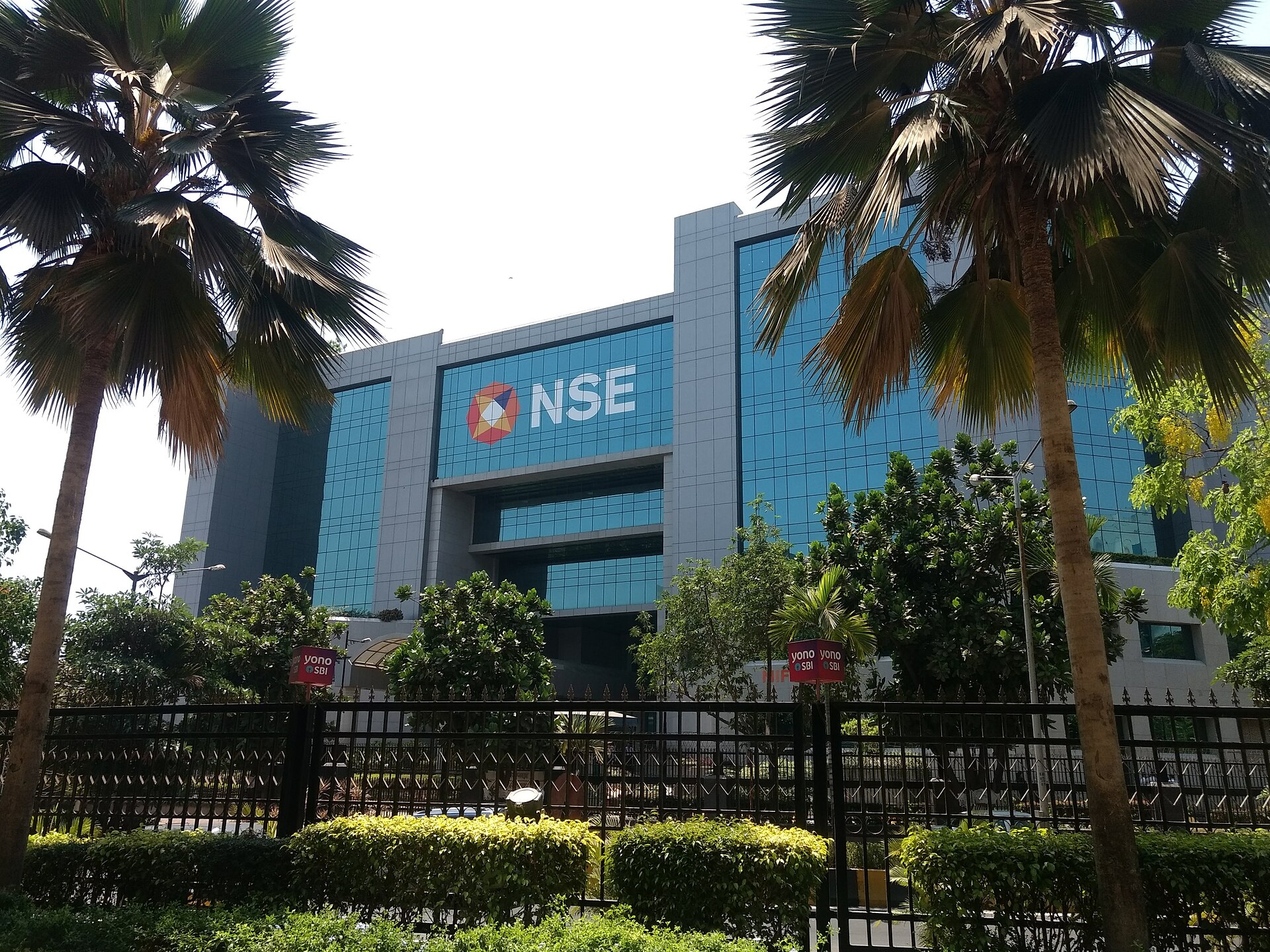
The Nifty fell 1.07% after Brent crossed $97
- Nifty 50
- 25,607.20, down 277.30 points or 1.07%27 November 2026 close; National Stock Exchange.
- Sensex
- 83,339.26, down 989.33 points or 1.17%27 November 2026 close; BSE.
- Brent crude
- $97.30 a barrel, up 0.8%27 November 2026 at 09:35 GMT; Reuters.
Indian large-cap shares fell sharply on Friday after an attack on Saudi Arabia’s Jazan refinery pushed oil-supply risk back into prices. The National Stock Exchange said the Nifty 50 closed at 25,607.20, down 277.30 points or 1.07%, while BSE data showed the Sensex lost 989.33 points or 1.17% to 83,339.26.
Brent crude rose to $97.30 a barrel by 09:35 GMT, up 0.8%, Reuters reported. The oil benchmark had settled at $96.57 on Thursday after gaining $1.96, placing most of the rise before and during the Indian trading session.
Business Standard, Moneycontrol, The Economic Times and Hindu BusinessLine all linked Friday’s equity decline to rising crude, alongside selling in technology and financial shares. The Nifty opened at 25,839.25 and reached 25,909.15 before falling to an intraday low of 25,565.90, NSE data showed. The reversal from an initially subdued move strengthens the case that oil concerns added to selling as the session progressed.
The timing supports oil as the immediate trigger, while the concentration of losses points to an amplified move in large-cap shares.
The index pattern shows that oil was the catalyst, not the whole explanation.

The attack raised supply risk, not a confirmed shortage
- Previous Brent settlement
- $96.57 a barrel, up $1.9626 November 2026 settlement; Reuters.
Saudi Arabia’s Ministry of Energy said an aerial projectile struck the Jazan refinery on Thursday, causing a fire and temporarily halting some operations. The ministry said the fire had been extinguished, one worker had died and specialist teams were assessing the damage. It did not disclose the refinery’s lost output or give a timetable for restoring operations.
Saudi coalition authorities attributed the attack to the Houthi movement. Reuters also reported attacks on vessels in the Strait of Hormuz and Houthi claims involving other Saudi energy infrastructure, widening concern beyond one refinery. The Houthi movement’s claims were reported by Reuters, but the physical effect on regional crude exports had not been quantified by Friday.
That missing figure matters. Brent’s move reflects the risk that attacks could interrupt production or shipping, not proof of a large current supply loss. Supply-surplus concerns and US inventories were still limiting the rise, Reuters reported. The market therefore reacted to a change in the probability of disruption, which can reverse if Saudi operations recover and shipping continues.
The price rise reflects a higher probability of disruption, rather than evidence that a large volume of crude has already been removed from the market.
Imported oil transmits the shock through costs and inflation
- Crude import dependence
- 88.7%FY2025-26, provisional consumption basis; Petroleum Planning and Analysis Cell ready reckoner.
- Crude import bill
- ₹10,92,248 croreFY2025-26, provisional; Petroleum Planning and Analysis Cell ready reckoner.
- Crude import quantity
- 245.8 million metric tonnesFY2025-26, provisional; Petroleum Planning and Analysis Cell ready reckoner.
India’s sensitivity to Brent comes from the amount of crude it buys overseas. The Petroleum Planning and Analysis Cell put crude-oil import dependence at 88.7% of consumption in FY2025-26. Its ready reckoner recorded 245.8 million metric tonnes of crude imports costing ₹10,92,248 crore during that year, with the data marked provisional.
A sustained increase in dollar oil prices raises refiners’ import invoices. It can then reach company earnings through fuel, freight, petrochemical feedstocks and packaging costs. How much reaches consumer inflation depends on the rupee, retail fuel prices, taxes and whether companies absorb higher costs in their margins.
The immediate implication is therefore broader than the earnings of oil producers or refiners. Higher input costs can weaken margins for transport, paint, tyre and consumer businesses, while a lasting inflation effect can influence the Reserve Bank of India’s rate decisions. A one-day oil move does not establish those outcomes. The duration of the disruption, rather than Friday’s price alone, determines the financial effect.
India’s high import dependence makes an oil shock relevant to inflation, company costs and interest-rate expectations even before physical supplies are lost.
The broader market did not behave like an oil panic
- Nifty Midcap 100
- 61,846.30, up 0.10%27 November 2026 close; NSE data reported by Moneycontrol and Business Standard.
- Nifty Smallcap 100
- 19,481.30, up 0.56%27 November 2026 close; NSE data reported by Moneycontrol and Business Standard.
- Nifty IT
- 32,758.10, down 1.88%27 November 2026 close; NSE index data reported by Moneycontrol.
- Nifty India Defence
- 9,251.20, up 3.33%27 November 2026 close; NSE index data reported by Moneycontrol.
The strongest case against blaming oil is the market’s breadth. The Nifty Midcap 100 gained 0.10% and the Nifty Smallcap 100 rose 0.56%, even as both large-cap benchmarks lost more than 1%. The Nifty India Defence index added 3.33% and the Nifty Metal index rose 1.40%.
The heaviest selling appeared instead in large technology, automobile, property and financial shares. The Nifty IT index fell 1.88%, although technology exporters are not direct large consumers of crude. That sector pattern is more consistent with investors reducing positions after a strong large-cap advance, with the oil rise providing the day’s negative catalyst.
The index pattern shows that oil was the catalyst, not the whole explanation. The contrary evidence narrows the conclusion: Friday was not a uniform reassessment of every Indian company’s oil risk. It was a concentrated large-cap decline in which higher crude increased inflation and margin concerns already facing the index. A persistent oil rise would need to spread losses more clearly into fuel-sensitive companies and the broader market to support a stronger claim.
Gains in smaller shares and several sectors weaken any claim that crude alone caused a broad withdrawal from Indian equities.
Sunday’s OPEC+ meeting will test whether the risk persists
- OPEC+ ministerial meeting
- 42nd OPEC and non-OPEC Ministerial MeetingScheduled for 29 November 2026; OPEC press statement.
- December production plan
- September 2026 required production maintained for DecemberDecision announced 1 November 2026; OPEC.
The next test is whether producers offset the new supply risk or reinforce it. The Organization of the Petroleum Exporting Countries and its partners are scheduled to hold their 42nd ministerial meeting on Sunday, 29 November. OPEC’s previous monthly announcement said seven participating countries would maintain their September 2026 required production levels for December.
An unchanged policy would leave the market dependent on evidence from Saudi facilities and Gulf shipping. A Saudi statement confirming full Jazan operations, together with uninterrupted tanker movements, would show that Friday’s oil premium rested mainly on feared disruption. A quantified outage or further attacks on export infrastructure would give the move a firmer physical basis.
The distinction determines the Indian-market effect. A short-lived risk premium mainly reverses part of Friday’s sentiment shock. A sustained loss of supply raises import costs for longer and gives the inflation, margin and interest-rate channels time to operate. The decisive evidence will be OPEC+’s 29 November decision and Saudi Arabia’s next operational update on the Jazan refinery.
Evidence of sustained export disruption would make Friday’s equity response more consequential; restored operations and unchanged OPEC+ supply would weaken it.
Sources
- Nifty 50 Index - NSE India · nseindia.com
- NSE - National Stock Exchange of India Ltd: Live Share/Stock Market News & Updates, Quotes- Nseindia.com · nseindia.com
- m.bseindia.com
- Energy Ministry: Worker Killed, Others Injured in Aerial Projectile Attack on Jazan Refinery · spa.gov.sa
- Coalition: Jazan Refinery Attacked by Terrorist Houthi Militia · spa.gov.sa
- Brent trades near month's high as Mideast conflict threatens supply · reuters.com
- SNAPSHOT OF INDIA’S OIL & GAS DATA · ppac.gov.in
- 41st OPEC and Non-OPEC Ministerial Meeting · opec.org