Demand has moved beyond the metros
- Amazon shopping volume
- Up 50% year on yearThe Great Indian Festival was still running when Amazon published the figure.
- Non-metro shoppers
- More than 70%Amazon did not disclose an absolute count of unique customers.
- Incremental D2C orders
- 66% from Tier 2 and Tier 3 citiesUnicommerce measured shipments handled by its own platforms.
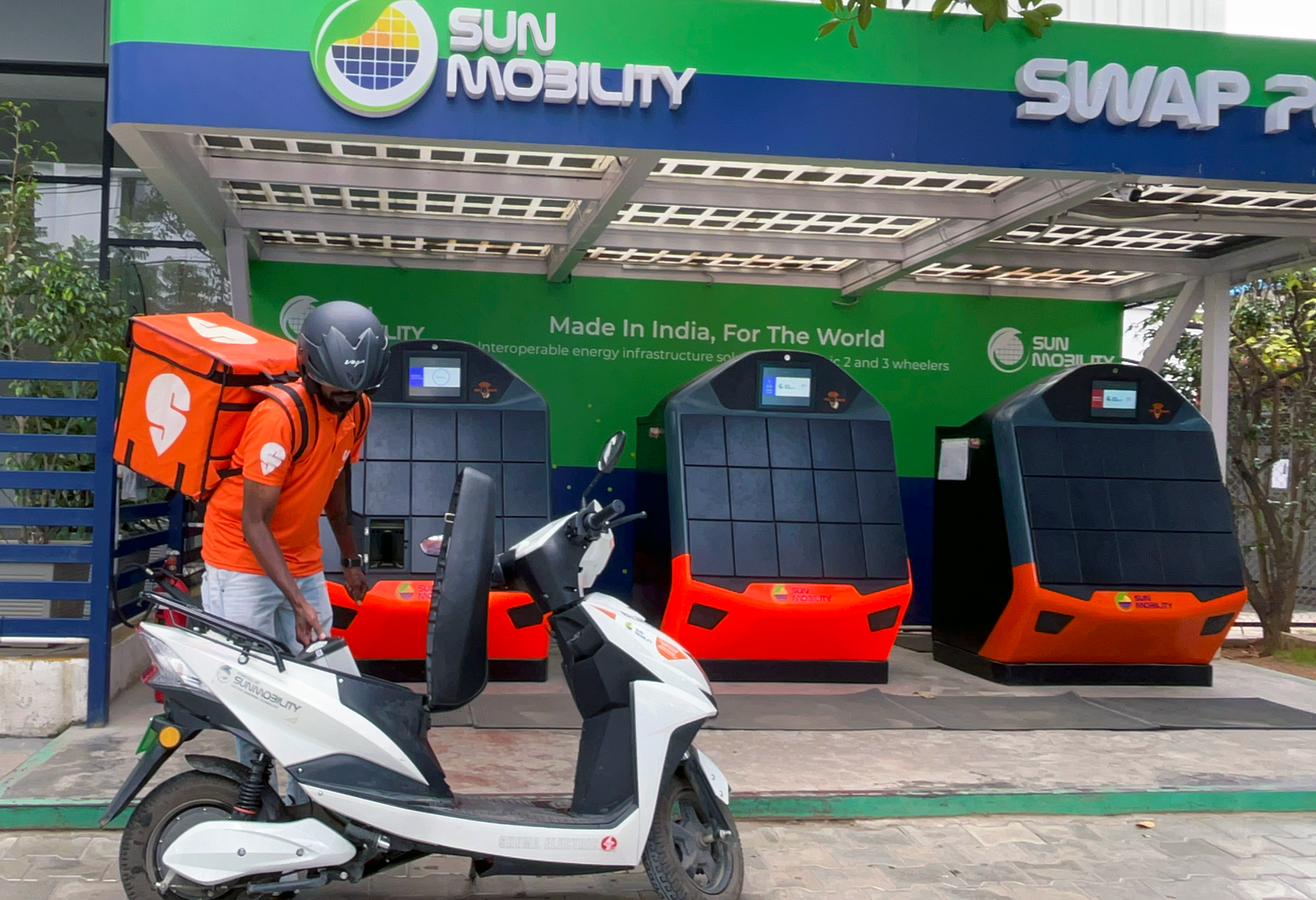
Amazon said on 3 November that shopping volume during its ongoing Great Indian Festival had increased 50% from a year earlier, with more than 70% of shoppers coming from outside the metros. Premium Android smartphones priced above ₹30,000 grew 50%, and Tier 2 and Tier 3 cities contributed more than half of that growth.
Unicommerce provides broader support, but also a necessary correction. Tier 2 and Tier 3 cities generated 66% of incremental direct-to-consumer order volumes in FY26, rather than 66% of all orders or customers expected in a future period. Its figures cover 410 million shipments handled for more than 6,000 brands.
Neither company defines city tiers on the cited pages, while Amazon’s non-metro category is not necessarily equivalent to Unicommerce’s Tier 2 and Tier 3 classification. The evidence nevertheless establishes a wider market. It does not yet establish that smaller cities have become equally strong centres of production, high-quality work and business profit.
Non-metro demand is broadening and includes premium products, but the available data do not show whether purchasing power or local value creation is rising as quickly.
India has widened the market faster than it has widened local value creation.
Poverty reduction enlarged the market
- Lower-middle-income poverty
- 57.7% in 2011; 16.1% in 2023The World Bank uses a $4.20-a-day line at 2021 purchasing power parity.
- People leaving poverty
- 49.6 croreWorld Bank estimate between 2011 and 2023.
- Monthly consumption
- ₹4,122 rural; ₹6,996 urbanMoSPI estimates excluding imputed free welfare items for 2023-24.
The expansion of consumption has a firmer foundation than festive discounting alone. The World Bank estimates that the proportion of Indians below its lower-middle-income poverty line fell from 57.7% in 2011 to 16.1% in 2023, lifting 49.6 crore people above that threshold. Extreme poverty fell from 27.1% to 2.6%.
India’s Household Consumption Expenditure Survey also found average monthly spending per person of ₹4,122 in rural areas and ₹6,996 in urban areas during 2023-24. The urban-rural gap was 70%, down from 84% in 2011-12, while the urban consumption Gini coefficient fell to 0.284 from 0.363.
The World Bank cautions that improved measurement probably contributed to the large welfare gain between the latest two surveys and that rich households remain under-represented. Even with that qualification, poverty alleviation has widened the consumer base. Consumption is the result of greater welfare, however, not proof of higher productivity.
Poverty reduction and a narrower consumption gap have enlarged the addressable market, although survey changes make the most recent improvement less certain than the headline suggests.
Local value creation still trails demand
- Unincorporated employment
- 12.81 crore workersMoSPI’s ASUSE 2025 covers non-agricultural manufacturing, trade and other services.
- GVA per worker
- ₹1.57 lakhCurrent-price measure for unincorporated market establishments in 2025.
- Regular salaried work
- 23.6%Share of all workers in usual status during calendar 2025.
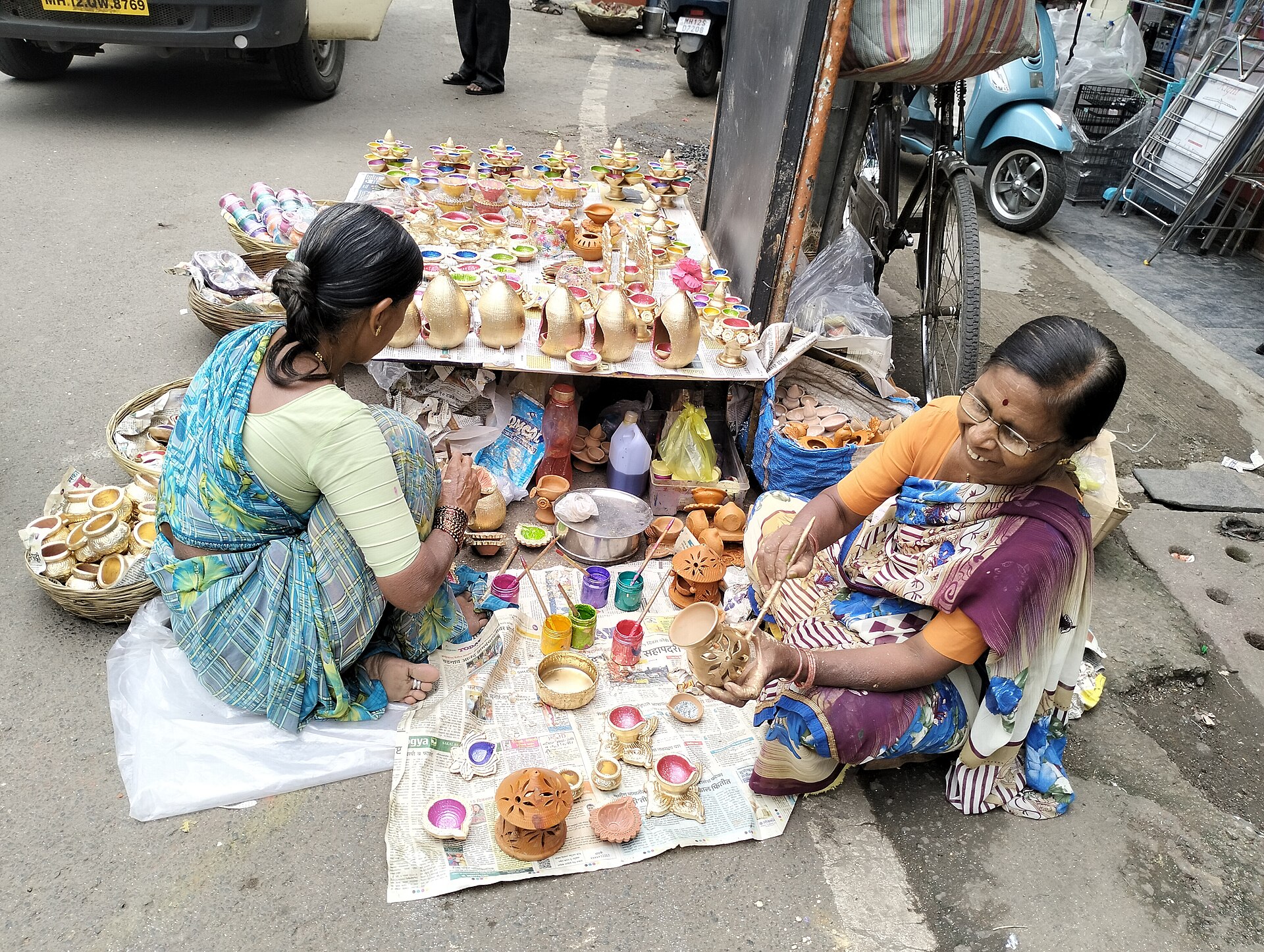
Amazon’s supply-side figures are encouraging but incomplete. More than 70% of participating small businesses in the festival’s first week came from Tier 2 and Tier 3 cities, while new sellers later recorded 2.3 times as many unit sales. Amazon disclosed neither their absolute sales nor their profits, manufacturing locations or dependence on discounts.
The official picture shows scale without commensurate productivity. India’s unincorporated non-agricultural sector employed 12.81 crore workers in 2025, after adding 74.52 lakh from 2023-24. Gross value added per worker rose 4.54% in current prices to ₹1.57 lakh so the increase does not represent a measured real productivity gain.
Employment quality also remains uneven. Regular wage or salaried work accounted for 23.6% of workers in 2025, while the urban unemployment rate was 6.9% in September 2026. India has widened the market faster than it has widened local value creation.
Smaller-city entrepreneurship is expanding, but low productivity and limited salaried employment remain the constraints on durable prosperity.
Value needs more than premium products
- D2C order growth
- 34%Unicommerce’s FY26 platform data.
- D2C GMV growth
- 33%Gross merchandise value on the same dataset.
- Festive COD return rate
- 58%Return-to-origin rate for cash-on-delivery orders in Unicommerce’s dataset.
A value-driven transition requires three linked changes. Consumers must receive reliable products and services, local firms must create more output per worker, and workers must receive enough income to sustain demand without exceptional discounts or credit support. Higher-priced purchases satisfy only the first test, and only when quality rather than financing drives them.
Unicommerce’s figures show why volume can mislead. D2C order volumes increased 34% in FY26 while gross merchandise value rose 33%, implying little increase in value per shipment across its dataset. During the festive quarter, 58% of cash-on-delivery orders were returned to origin, compared with less than 15% of prepaid orders.
For listed consumer, retail and logistics companies, the more useful disclosures will therefore be repeat purchases, average selling prices, gross margins, inventory turns, return rates and store productivity outside the largest cities. Amazon’s premium-category growth is supportive, but it disclosed no absolute merchandise value or profit contribution from smaller cities.
Investors need evidence of repeat demand, margins and local productivity because order growth alone can conceal weak economics.
Demand may build local supply
- Business internet use
- 26.68% in 2023-24; 39.37% in 2025Share of unincorporated enterprises using the internet for entrepreneurial purposes.
- Urban infrastructure investment
- 0.7% of GDPWorld Bank estimate of present investment in India.
- Infrastructure required
- More than $2.4 trillionWorld Bank estimate for resilient and low-carbon urban development through 2050.
The strongest case against this analysis is that demand creates its own supply response. Digital marketplaces give a small-town producer national reach, denser orders justify warehouses and delivery networks, and stronger retail demand attracts formal stores and services. Internet use by unincorporated enterprises rose from 26.68% in 2023-24 to 39.37% in 2025.
Amazon’s Tier 2 and Tier 3 seller participation supports that case, as does the 10.87% current-price growth in unincorporated-sector gross value added during 2025. The countercase weakens the claim that production is absent. It does not establish that these businesses earn durable profits, employ more salaried workers or close the productivity gap with the largest cities.
City services will determine how much value stays local. The World Bank puts India’s urban infrastructure investment at 0.7% of GDP and estimates that more than $2.4 trillion will be needed by 2050. The next concrete test is MoSPI’s annual 2026 labour survey, scheduled for 25 March 2027, particularly whether regular salaried employment rises alongside consumption.
Digital commerce can help smaller cities build businesses, but city finance, infrastructure and employment data must confirm that demand is becoming local prosperity.
Sources
- Amazon Great Indian Festival 2026 records highest-ever customer ... · aboutamazon.in
- Sellers see up to 3.5x growth during Amazon Great Indian Festival 2026, with small businesses achieving · aboutamazon.in
- India D2C Report 2026: Operations, RTO & Growth Data | Unicommerce · unicommerce.com
- Poverty & Equity Brief · documents1.worldbank.org
- Household Consumption Expenditure Survey: 2023-24 · mospi.gov.in
- mospi.gov.in › uploads › latestReleasesPRESS NOTE ON - mospi.gov.in (https://mospi.gov.in/uploads/latestReleases/latest_release_1778063743760_e338f15d-195f-429f-892d-aa4155c7c4ce_Press_Note_ASUSE_2025_Report-English_(1).pdf)
- Million +cities-combined Press note - mospi.gov.in · mospi.gov.in
- Press Note on the Periodic Labour Force Survey Annual ... · mospi.gov.in